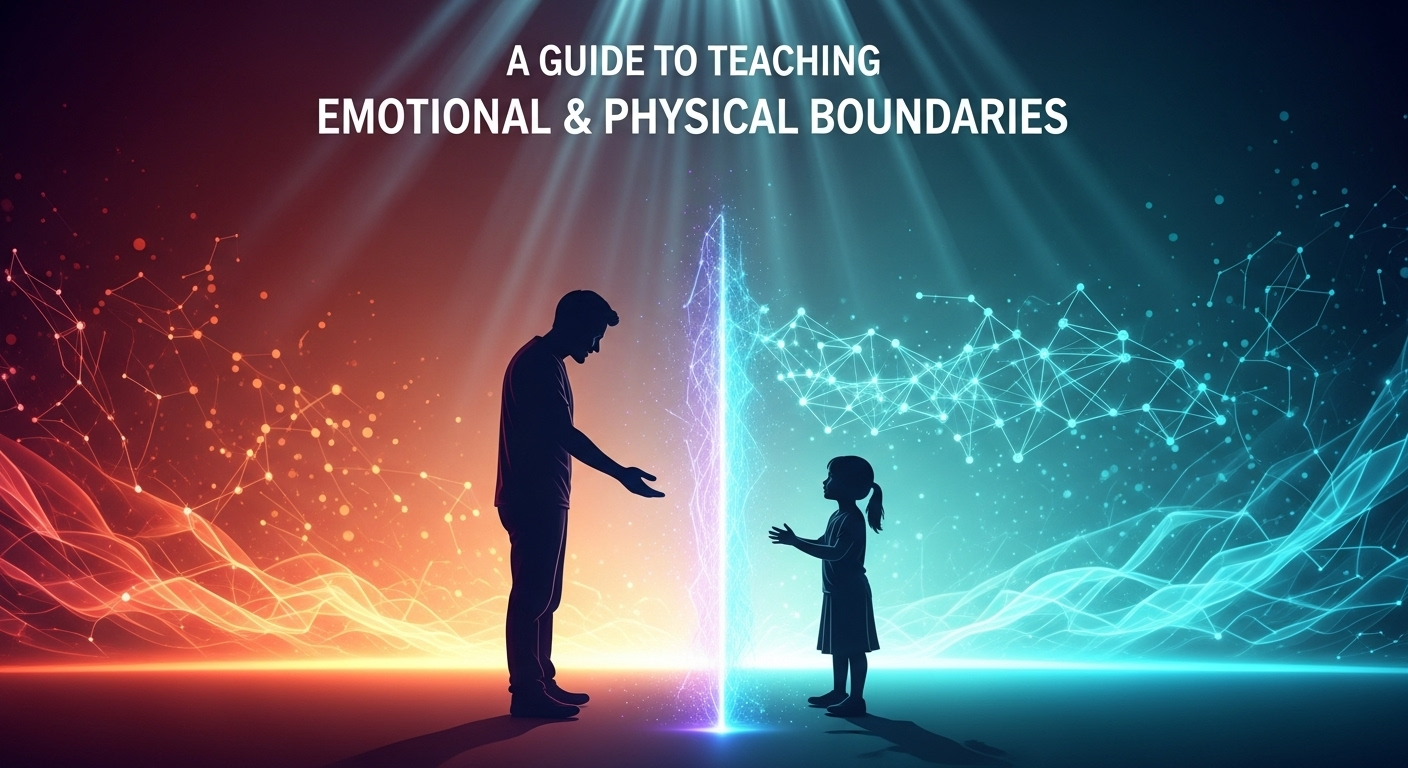
In a world that is more connected yet often more intrusive than ever, the ability to understand and maintain personal limits is a critical life skill. It’s the foundation of self-respect, healthy relationships, and mental well-being. For parents, guardians, and educators, the task of instilling this knowledge in children from a young age is both a profound responsibility and a powerful gift. This comprehensive guide is dedicated to teaching about emotional and physical boundaries, providing actionable strategies and deep insights to help you raise children who are confident, respectful, and emotionally intelligent. By starting early and remaining consistent, we can empower them to navigate their social world with security and grace. A Guide to Teaching Emotional & Physical Boundaries Understanding the Core Concepts: What Are Emotional and Physical Boundaries? Before we can effectively teach boundaries, we must first have a crystal-clear understanding of what they are and why they are so vital. Boundaries are not walls we build to isolate ourselves; they are more like a personal "user manual" we create to show others how we expect to be treated. They define where we end and another person begins, encompassing our physical space, our feelings, our thoughts, and our responsibilities. Understanding this distinction is the first step toward modeling and teaching healthy interactions. The primary purpose of boundaries is protection and self-preservation. They protect our physical safety, our emotional energy, and our mental peace. When children learn to set and respect boundaries, they are less likely to be taken advantage of, more likely to engage in healthy relationships, and better equipped to handle peer pressure and conflict. They develop a strong sense of self-worth because they recognize that their feelings, bodies, and personal space are valuable and worthy of respect. Ultimately, teaching boundaries is an act of empowerment. It gives children the language and confidence to advocate for their own needs. It moves them from a passive role, where things happen to them, to an active one, where they have a say in their interactions. This foundational skill will serve them throughout their entire lives, from the playground to the classroom, and eventually to their workplaces and personal relationships. Defining Physical Boundaries Physical boundaries relate to your body, privacy, and personal space. They are often the easiest for children to understand because they are tangible. These boundaries determine who can touch you, how and when they can touch you, and how close someone can stand to you. It's about respecting the "personal bubble" that everyone has around them. A violation of a physical boundary can be as overt as an unwanted hit or as subtle as someone standing uncomfortably close in a conversation. Teaching children about physical boundaries is synonymous with teaching them about consent and bodily autonomy. It starts with simple concepts like "your body belongs to you." This means they have the right to decide who gives them a hug or a high-five. Examples of healthy physical boundaries include: Asking for a hug instead of demanding one. Knocking on a closed bedroom or bathroom door before entering. Not touching someone's hair or personal belongings without permission. Giving people enough physical space so they don't feel crowded. Defining Emotional Boundaries Emotional boundaries are more abstract but equally important. They refer to the line between your own feelings and the feelings of others. Having healthy emotional boundaries means you don't take responsibility for how other people feel, and you don't allow others to dictate your own emotional state. It's about recognizing that you are in charge of your own happiness and that it's not your job to "fix" everyone else's problems. For children, this can be a complex concept. It often manifests in situations like feeling guilty if a friend is sad, or feeling obligated to share a secret that makes them uncomfortable. Teaching emotional boundaries is about giving them permission to have their own feelings without guilt. Examples of healthy emotional boundaries are: Knowing it's okay to say "no" to a friend who wants you to do something you don't want to do. Understanding that you are not responsible for a parent's or a sibling's bad mood. Not feeling pressured to share personal thoughts or feelings if you are not ready. Having the right to disagree with someone respectfully. The Foundation: How to Start Teaching Boundaries at a Young Age The process of teaching boundaries begins long before complex social dynamics come into play. For toddlers and preschoolers (ages 2-5), the world is a laboratory for learning social rules. This is the prime time to introduce foundational concepts in a simple, repetitive, and positive way. The goal at this stage isn't to have deep philosophical conversations, but to build a framework of respect and bodily autonomy through everyday actions and language. At this age, learning is experiential. Children learn by doing, seeing, and hearing. Therefore, the most effective method is modeling. Your own interactions with your child and with others serve as their primary textbook. When you ask for a hug instead of just taking one, or when you say, "I need a moment of quiet time," you are actively demonstrating what a healthy boundary looks and sounds like. Consistency is your most powerful tool during these formative years. Furthermore, it's crucial to empower your child's voice. When they express a boundary, even in a fumbling or clumsy way, it's a moment for celebration and reinforcement, not for correction or dismissal. If they say "stop" during a tickle fight, you stop immediately. If they turn away from a relative's hug, you support their choice. This validation teaches them that their voice matters and that their boundaries will be respected, giving them the confidence to continue using them. Using Simple, Concrete Language Young children thrive on simple, direct, and concrete language. Abstract concepts of "emotional energy" or "personal agency" are meaningless to them. Instead, use words and phrases that connect to their physical experience. The concept of a "personal bubble" is a fantastic visual tool. You can have them